SIA seeks review of fire safety regulations, closes sick pay gaps
The Swiss Insurance Association SIA has called for a fundamental review of the scope and content of national fire safety regulations, which are currently being revised. Stringent requirements are essential, but ensuring regulations are feasible is just as important. With regard to daily sickness benefits, amendments to the vested benefits agreement have been introduced that will enable the industry to increase insurability. In addition, the SIA reported robust premium volume growth for the 2025
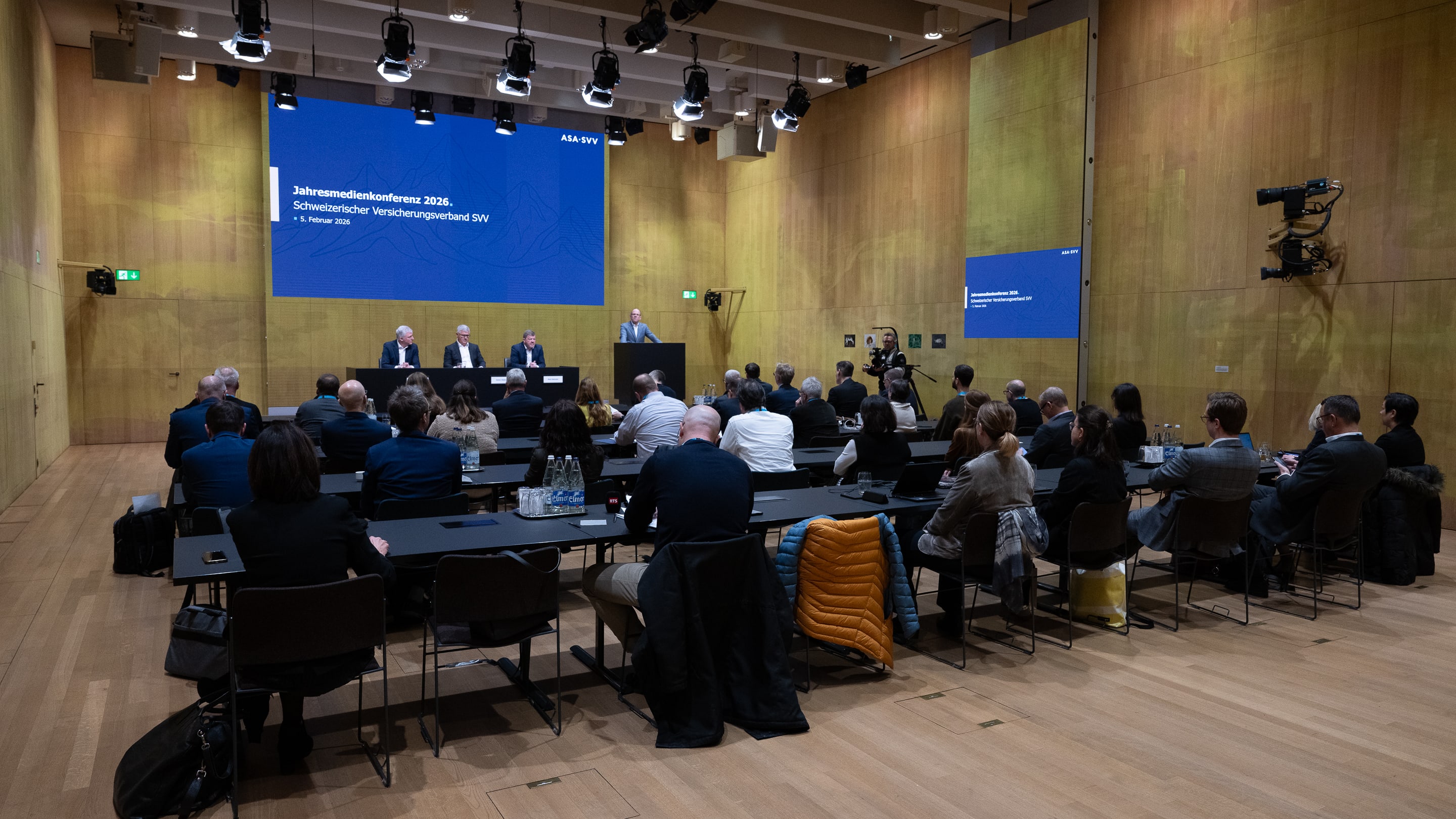
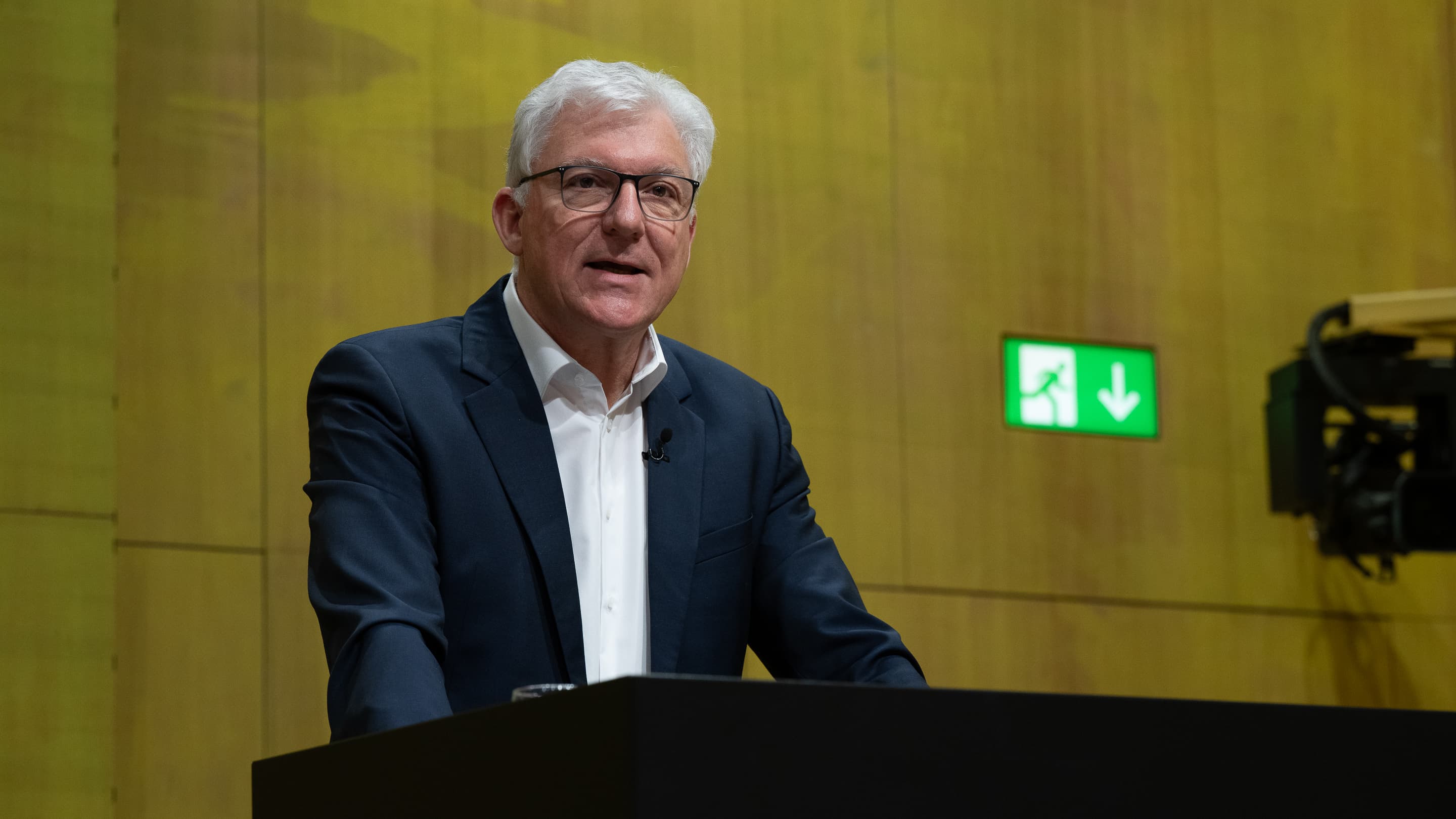
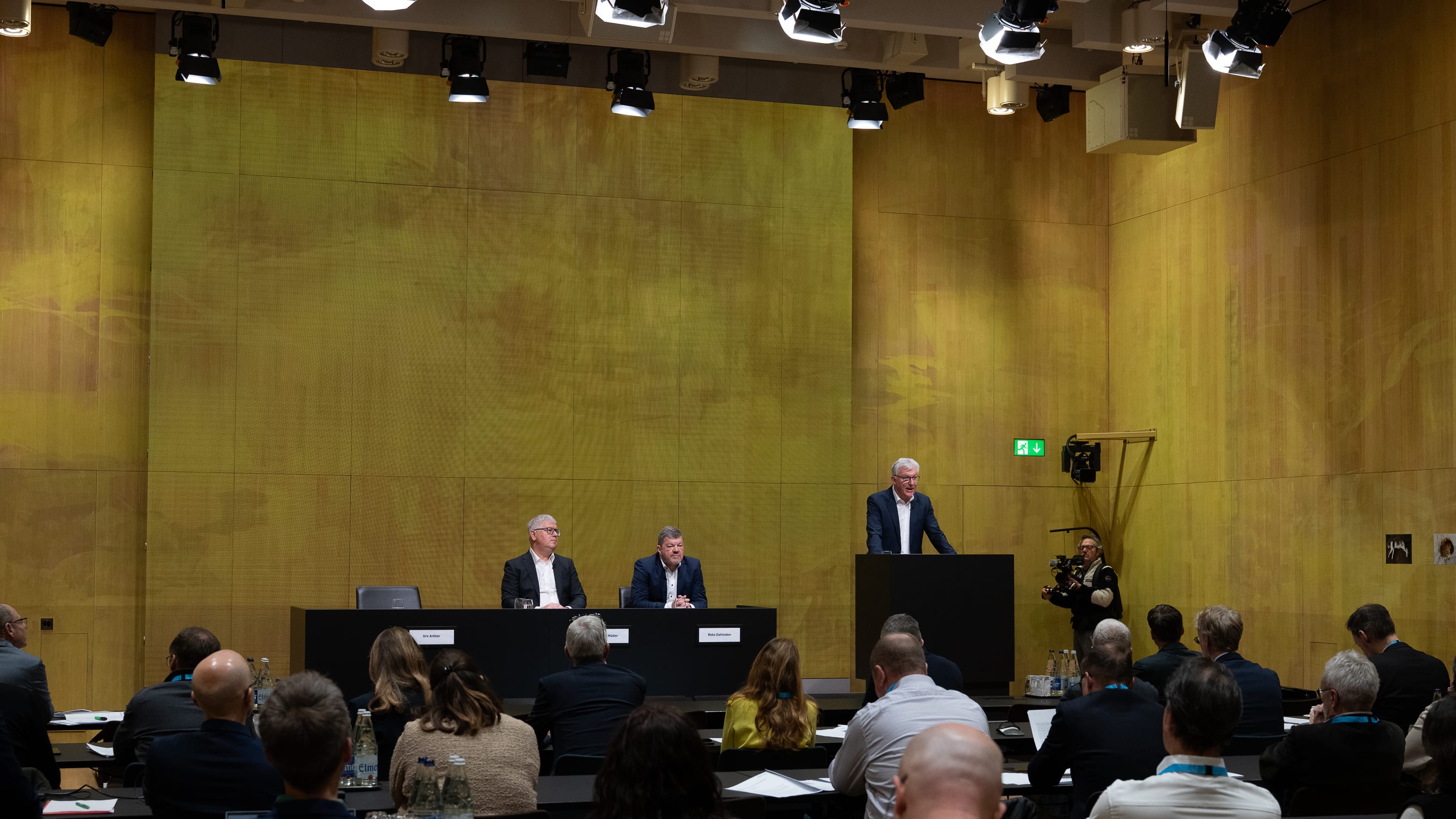
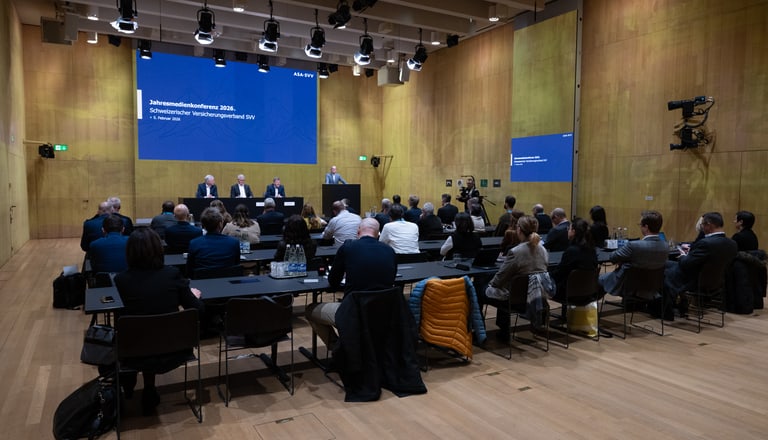
At the beginning of the SIA’s annual media conference, Stefan Mäder, Chairman of the SIA, paid tribute to the victims of the fire in Crans-Montana and issued a rallying call to action: ‘Now is the time to take a close look at what really caused this. As a country, we have a duty to make consistent improvements wherever gaps appear – in terms of regulations and how they are enforced.’
Mäder also commented on the growing demands for a state monopoly on building insurance: ‘It’s not a question of how insurance is organised; it’s about the effective quality of fire safety regulations, controls and enforcement.’
Fire safety regulations currently being revised – SIA calls for a fundamental review
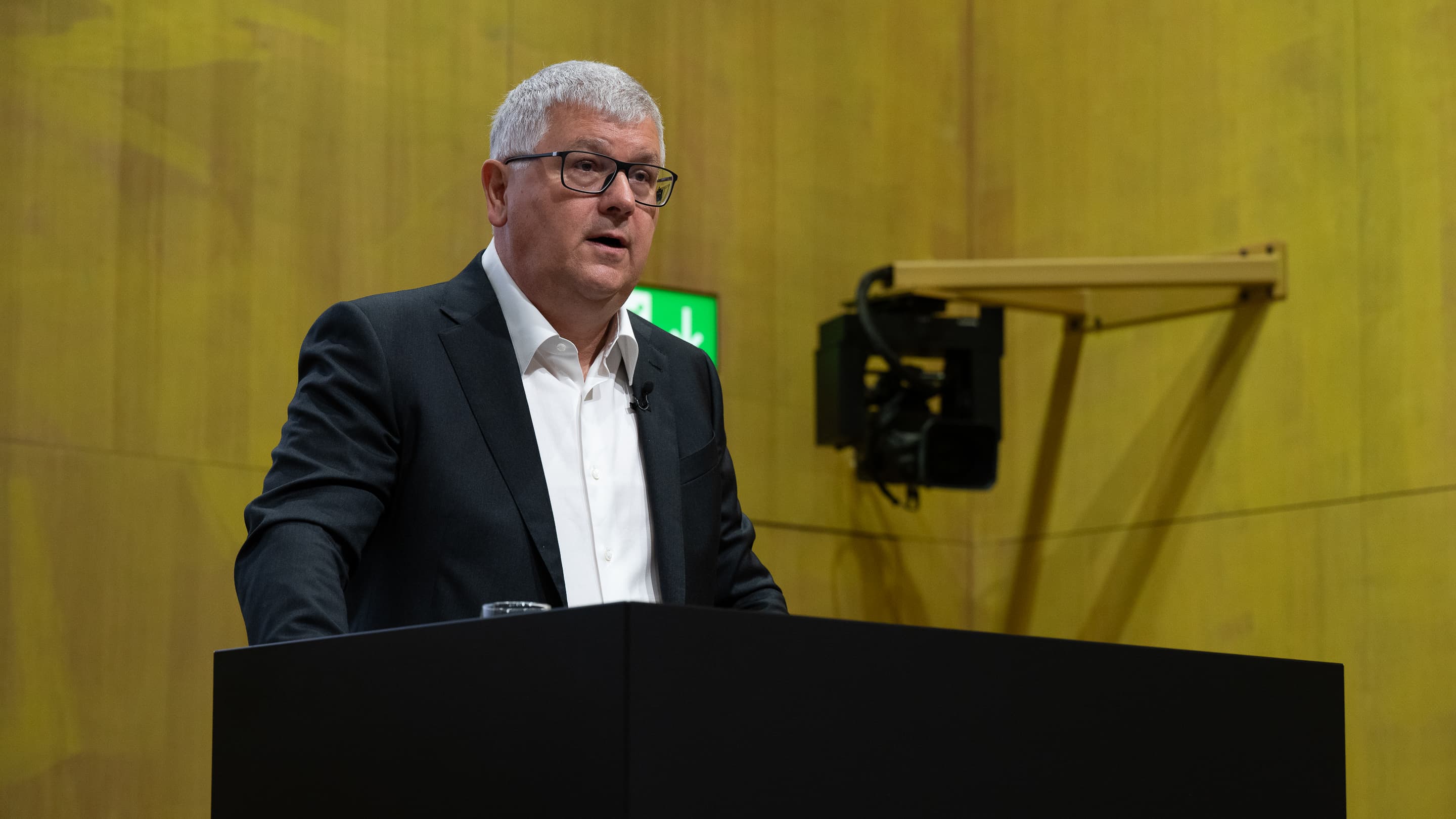
To implement this, the SIA is calling for a new, fundamental review of the scope and content of the fire safety regulations in force throughout Switzerland. This includes another technical consultation and careful examination of the feedback received. ‘The regulations must meet stringent safety requirements without making it unnecessarily complex to enforce them,’ said Urs Arbter, the CEO of the SIA.
The incident in Crans-Montana has shown that Switzerland has a functioning and resilient social security system, with health and accident insurers playing their part in ensuring medical assistance was provided quickly and effectively. ‘The insurance industry is fully committed to its contractual obligations. Wherever appropriate, the industry will participate in talks and discussions with experts to find quick, unbureaucratic solutions in the interests of the victims and their families,’ Arbter added.
Daily sickness benefits: vested benefits agreement to be further developed
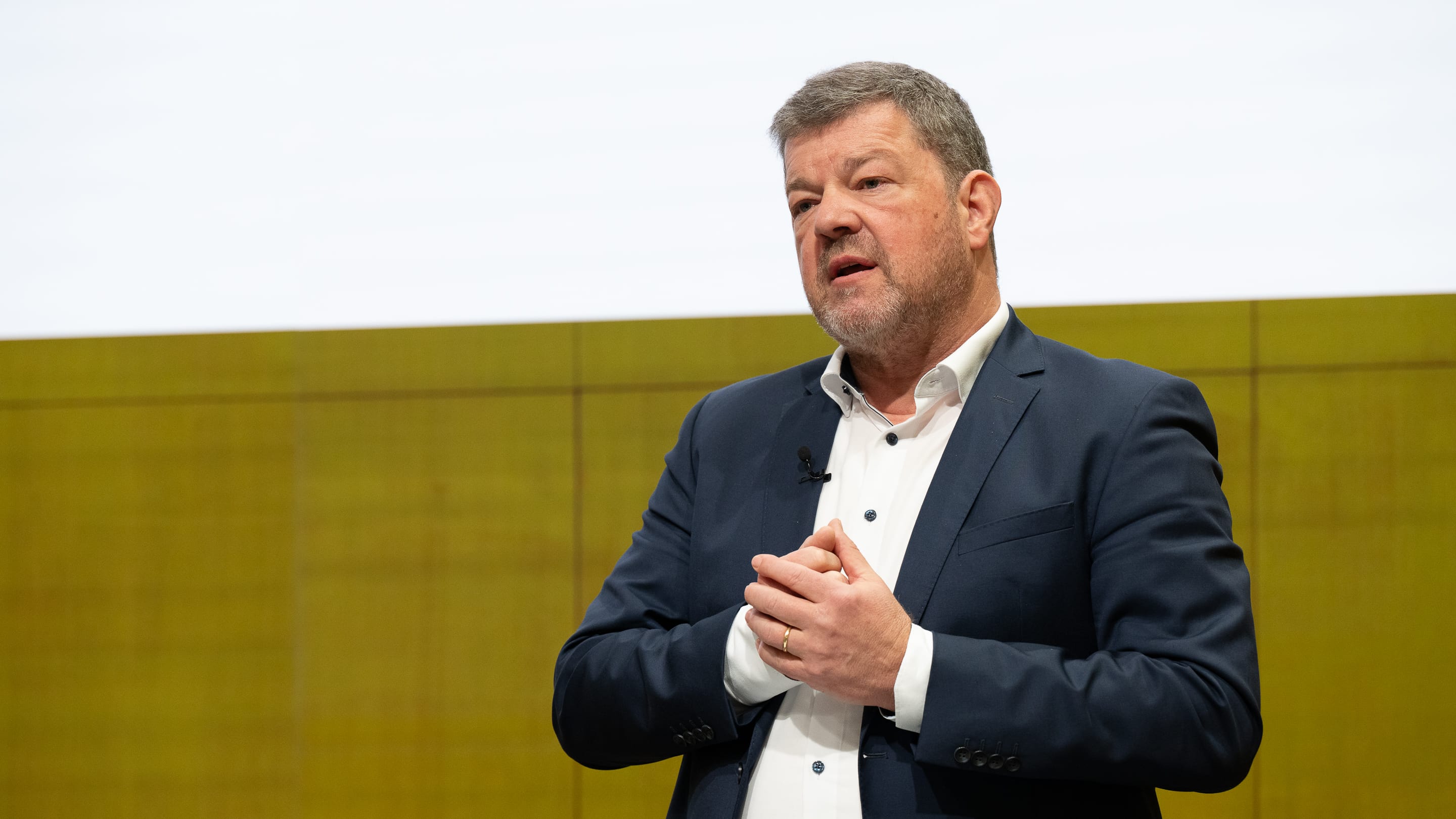
The SIA also provided information on developments in daily sickness benefits insurance. With the number of sickness-related absences on the rise, they are becoming increasingly important – both as a bridge between employers’ obligation to continue salary payments and social insurance and in terms of prevention and reintegration. Reto Dahinden, member of the SIA’s Board of Directors and CEO of SWICA, explained: ‘By making targeted adjustments to the vested benefits agreement between daily sickness benefit insurers, we can tackle this issue even more effectively and avoid any insurance gaps.’
The amendments include an advance payment obligation; if there are disagreements between the previous and new insurer in the event of a change of insurer or employer, the previous insurer will initially assume responsibility for any advance payments. The insurers involved will then coordinate matters with each other afterwards, giving insured employers more planning certainty.
In addition, a fallback solution will be created for companies that cannot find daily sickness benefit insurance through no fault of their own. Companies will either be reinstated with their existing previous insurer (subject to a limited premium rate increase) or assigned to an insurer in accordance with the allocation mechanism.
‘The amendments show that the industry is perfectly capable of solving problems on its own – there is no need for additional government intervention or mandatory measures,’ Dahinden emphasised. The amended agreement is scheduled to enter into force on 1 January 2027.
Stable premium volume growth
The figures for 2025 paint a clear picture that the insurance industry is once again proving to be a stable anchor for businesses and customers, even in uncertain times. Premium growth was mainly concentrated in the non-life segment, where continued high construction and repair costs and the resulting rise in insured amounts led to above-average growth in premium volumes (+4.4 per cent). The hedging of cyber and earthquake risks also continues to grow, although the low level of market penetration shows that there is still potential here.
Growth in the health and accident segment was moderate (+1.7 per cent) despite continued high cost pressure. The life segment remained stable overall (+0.1 per cent), with a result that was largely offset by opposing trends. The trend towards partial autonomy dampened premium volumes in group life insurance; however, individual life insurance grew significantly thanks to strong single premiums. For reinsurance, only an estimate can be provided for 2025, with a slight decline expected.
Note to editors
The Swiss Insurance Association SIA is the industry association of the Swiss private insurance industry. With approximately 70 member organizations, including globally active primary insurers and reinsurers as well as nationally oriented, specialised property, life and supplementary health insurers, the association represents over 95 per cent of the insurance premiums generated in Switzerland. The SIA is committed to the sustainable development of the insurance industry and promotes solutions that contribute to the stability and security of the Swiss economy and society. The private insurance industry thus makes an important contribution to prosperity in Switzerland. The industry is one of the most productive and value-adding sectors in the country and employs around 50,000 people.
Media contact
Swiss Insurance Association SIA
Phone: +41 44 208 28 14
E-mail: media@svv.ch